Happy barn-
preparedness through community
About the project
In the villages of Rumma, Löckerum, Boda, Himmelsrum, Fästad, and Rödja, there is a strong local engagement and a desire to develop the countryside together. Through the project Happy Barn – Preparedness through community residents, associations, and local actors will strengthen the local community and build practical preparedness for the future.
The project is based on the idea that a safe and sustainable local community is created from the countryside's own knowledge, relationships, and shared resources. The work begins with a structured mapping and analysis of the countryside's resources, needs, and development opportunities. The result will be a local development plan that shows what the countryside has and what needs to be developed. As a complement, a value-creating map will also be produced that highlights the social and economic value of local supply chains and collaboration. Based on this, concrete actions will be implemented that strengthen both the local community and the countryside's resilience.
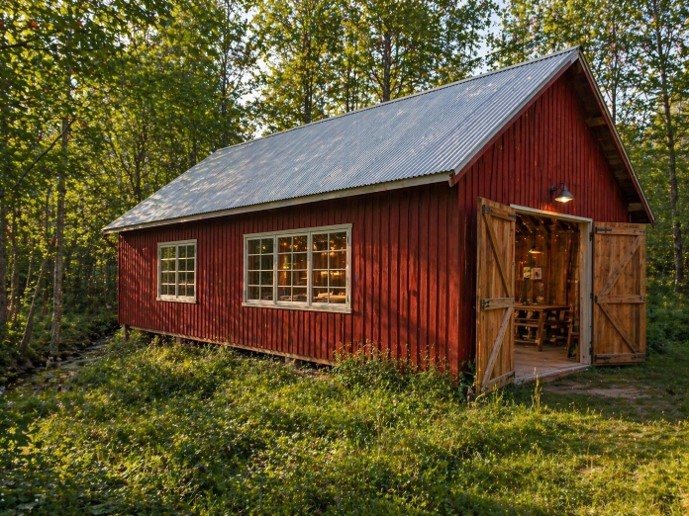
An existing barn will be renovated and become a new meeting place for training, workdays, and joint activities. A mobile cart will be converted into a mobile kitchen and a flexible gathering point that can be used at events and a local safety point during crisis situations. The project also includes the restoration of shared water sources and root cellars, as well as the establishment of micro-cultivations that contribute to increased local food supply.
During the project period, training, workshops, and village meetings will be organized with a focus on cultivation, food supply, crafts, recycling, and crisis preparedness. The work is based on voluntary engagement and collaboration between associations, study associations, and other local actors.
An important part of the project is to document the work process and develop a model for how villages can work with local development, community, and preparedness. Experiences and results will be disseminated through a final seminar and shared with other villages and actors within Leader Kustlandet so that the working model can be used and inspire more local communities.
Project's purpose and goals
The purpose of the project is to strengthen local resilience, community, and practical crisis preparedness in the villages of Rumma, Löckerum, Boda, Himmelsrum, Fästad, and Rödja. By utilizing the local community's own knowledge, relationships, and shared resources, the association aims to create conditions for a more robust, inclusive, and independent local community.
The project's goals are:
• A local development plan for the countryside's continued development and preparedness
• A barn will have been converted and adapted to a functional gathering place
• A mobile cart will have been converted and equipped to be used as a mobile kitchen and support resource during crisis situations, exercises, and events.
• Shared water sources and root cellars will have been restored
• Community cultivations will have been established
• Training and courses will have been conducted to increase residents' knowledge of sustainable development, preparedness, craft traditions, and knowledge transfer between generations.
• The project's working model, methods, and experiences shall have been documented.
About the project
Project period
26.04.21-27.12.31
Project type
Project support.
Intervention area
Housing, infrastructure, and communications
Project owner
Glada Ladans Community Association
Contact person
Angéla Ekman-Nätt
Henning Michelsen
Web and social media
Website
About funding
Granted leader support
469,252 kronor
Private financing.
Own private: 50,000 kr
Volunteer work:
700 h voluntary work
Total funding
519,252 kronor
The Leader support consists of funding from the EU and the state and the municipalities of the Coastal Land.
Rural Development Fund